

The vagus nerve has become something of a celebrity in health and wellness circles over the past few years. And for good reason. It's the longest cranial nerve in the body, threading its way from your brainstem down to your heart, lungs, gut, and practically every major organ you've got. Because it runs the show for your parasympathetic nervous system, it has a hand in everything from digestion and heart rate to inflammation, mood, and how well you bounce back from stress.
Naturally, that level of attention has brought a flood of supplement products marketed for "vagus nerve support." But how much of this is backed by actual research? That's what this article sets out to answer. We'll look at the nutrients most commonly linked to vagal function, weigh up the evidence for each, and be honest about where the science is strong and where it's still catching up to the claims.
Understanding the Vagus Nerve and Vagal Tone
The vagus nerve (cranial nerve X) travels from the brainstem down through the neck and into the thorax and abdomen. It carries roughly 80% of all parasympathetic nerve fibres, which makes it the main channel through which your brain tells the rest of your body to calm down, digest food, and repair itself.
Vagal tone is essentially a measure of how active your vagus nerve is. When it's high, you tend to recover from stress more quickly, digest better, keep inflammation in check, and generally feel calmer. When it's low, the picture isn't great. Low vagal tone is linked to a range of symptoms including anxiety, digestive problems, chronic inflammation, and persistent fatigue.
How Vagal Tone Is Measured
Heart rate variability (HRV) is the go-to proxy for vagal tone. It measures the tiny fluctuations in time between one heartbeat and the next. More variability is actually a good sign. It means your nervous system can shift nimbly between activation and recovery, reflecting strong parasympathetic (vagal) influence on the heart. A review in Frontiers in Public Health confirmed that specific HRV parameters, particularly those in the high-frequency band, are reliable markers of cardiac vagal tone.
This matters a great deal when we're evaluating supplements. If a nutrient consistently raises high-frequency HRV in controlled trials, that's meaningful evidence for vagal support. If the evidence comes only from rat studies or plausible-sounding mechanisms, we should be more cautious about the claims being made.
Supplements with the Strongest Evidence
Omega-3 Fatty Acids (EPA and DHA)
Of all the nutrients studied for vagal tone, omega-3 fatty acids have the most consistently positive track record. Multiple randomised controlled trials show that omega-3 supplementation raises high-frequency HRV, the component most directly tied to vagal activity.
A placebo-controlled crossover trial in the Journal of the American Heart Association found that high-dose EPA and DHA (3.4 grams per day) increased total HRV power by 20.6% compared to placebo in adults with elevated triglycerides. An earlier study in men recovering from heart attacks found that omega-3 supplementation lowered resting heart rate and increased high-frequency HRV, both consistent with stronger vagal activity.
A review in Frontiers in Physiology went as far as calling omega-3 fatty acids the best-studied nutrient for HRV modulation, noting consistent evidence for enhanced vagal tone, reduced inflammation, and improved cell membrane function. The likely mechanism? EPA and DHA get incorporated into cardiac cell membranes, where they influence ion channel behaviour and parasympathetic signalling.
Magnesium
Magnesium's importance for nervous system regulation is well established, and its relevance to vagal function works through several pathways that feed into one another. It promotes GABA activity in the brain while keeping glutamate, the main excitatory neurotransmitter, in check. The net effect is a calmer central nervous system that's more receptive to parasympathetic signalling.
A study in MMW Fortschritte der Medizin found that taking 400 milligrams of magnesium daily increased parasympathetic activity and vagus nerve function on HRV analysis over ten weeks. On the animal side, research showed that magnesium deficiency drove sympathetic nervous system activity and catecholamine output up by 2.4-fold compared to controls, with blood pressure rising in step.
The relationship between magnesium and nervous system regulation runs both ways. Chronic stress burns through magnesium, and running low on magnesium makes the stress response worse. It's a vicious cycle, well described in a review published in Nutrients. And it's particularly concerning given how widespread subclinical magnesium deficiency actually is.
For vagal support specifically, magnesium bisglycinate is a strong option. It's highly bioavailable, and the glycine it's chelated with has its own calming properties. Magnesium taurate is another good choice, pairing magnesium with taurine, an amino acid that modulates GABA receptors and brings independent cardiovascular benefits to the table. Our guide to magnesium types covers the full comparison.
Probiotics and the Gut-Brain Axis
Here's where things get really interesting. The vagus nerve is the main physical link between your gut and your brain. This two-way communication route, the gut-brain axis, means that what's living in your microbiome can directly shape vagal signalling.
A 2025 randomised controlled trial in Translational Psychiatry found that a multi-species probiotic significantly improved morning vagus nerve function in patients with major depression compared to healthy controls, measured through HRV. It's one of the first human trials to directly look at vagal function in response to probiotics, and the results were encouraging.
Earlier animal work had already pointed in this direction. Lactobacillus rhamnosus was shown to influence anxiety-related behaviour through a pathway that depended on an intact vagus nerve. Cut the nerve, and the effects disappeared. Bifidobacterium longum showed similar vagal activation and reduced anxiety-like behaviour in animal models.
Some probiotic species, including Lactobacillus plantarum, can actually produce acetylcholine, the neurotransmitter the vagus nerve uses to communicate with target organs, potentially acting as a direct vagal stimulant. A review in Advances in Experimental Medicine and Biology explored these mechanisms in depth, though it acknowledged that human clinical data is still limited.
Supplements with Emerging Evidence
Vitamin B12
A systematic review of micronutrients and heart rate variability singled out vitamin B12 as having some of the most compelling evidence among micronutrients for its association with HRV. B12 deficiency was linked to reduced HRV, especially in older adults where deficiency is more common.
The mechanism probably comes down to B12's essential role in neurophysiological signalling and methylation. Myelin sheath integrity, which depends on having enough B12, is critical for nerve conduction speed throughout the autonomic nervous system, vagus nerve included. People with methylation-related issues may be especially vulnerable to suboptimal B12 affecting their vagal function.
Vitamin D
That same systematic review found vitamin D deficiency was also associated with reduced HRV, putting it alongside B12 as a micronutrient worth paying attention to. But there's an important caveat: the available studies are observational, not interventional. So we can see the association, but we can't yet say with confidence that supplementing vitamin D will directly improve vagal tone in someone who's deficient.
That said, vitamin D receptors are scattered throughout the nervous system, and vitamin D plays well-documented roles in immune modulation and inflammation. A plausible biological pathway exists. The sensible approach is to correct any deficiency rather than supplementing vitamin D with vagal support as the primary goal.
GABA (Gamma-Aminobutyric Acid)
GABA is the brain's chief inhibitory neurotransmitter and it's fundamental to how the parasympathetic nervous system operates. Research published in Science identified GABA receptors in the brainstem region that controls vagal outflow to the heart, establishing a direct connection between GABA activity and vagal function.
A 2024 randomised controlled trial found that GABA supplementation increased heart rate variability with heightened parasympathetic predominance in sedentary overweight women during physical exercise. The results were promising. But there's an ongoing debate about how effectively oral GABA actually crosses the blood-brain barrier. Some researchers suspect the benefits come from peripheral effects rather than central nervous system activity.
Choline
Choline is a precursor to acetylcholine, the neurotransmitter the vagus nerve relies on to talk to its target organs. Without enough choline, your body simply can't make sufficient acetylcholine, which would theoretically weaken vagal signalling. The biology makes sense. But direct clinical trials looking at choline supplementation and vagal tone in humans are thin on the ground.
Phosphatidylcholine, a form found in egg yolks and supplement form, may be particularly relevant because of its additional role in cell membrane integrity, which affects how nerve signals are transmitted. Still, most of the evidence here is mechanistic rather than clinical.
Nutrients with Theoretical Support but Limited Human Evidence
Zinc
The systematic review on micronutrients and HRV included four studies on zinc, and the results were mixed. Zinc does play roles in neurotransmitter function and immune regulation, both of which could plausibly affect vagal tone. But the evidence isn't strong enough to make specific recommendations for vagal support. Keeping your zinc levels adequate through diet and supplementation where needed is sensible general practice, and copper-zinc balance is something to keep in mind if you're supplementing.
Curcumin
Animal studies suggest curcumin can boost vagal activity, likely through its anti-inflammatory effects. Chronic inflammation impairs vagal function, and curcumin is one of the most studied natural anti-inflammatory compounds out there. The trouble is, human trials specifically looking at curcumin's effect on HRV or vagal tone don't really exist yet. And the well-known bioavailability problems with standard curcumin formulations add another layer of uncertainty.
The Bigger Picture: Vagal Tone Is Not Just About Supplements
Supplements have a genuine role to play, but let's be honest: the most powerful tools for improving vagal tone are the ones you do, not the ones you swallow. A systematic review and meta-analysis of 223 studies confirmed that voluntary slow breathing increases vagally-mediated HRV both during practice and as a lasting effect after regular sessions over time.
Practices with strong evidence for improving vagal tone include:
- Slow diaphragmatic breathing with extended exhalation (the single most accessible and well-evidenced vagal activator)
- Cold water face immersion which triggers the dive reflex, a potent vagal response
- Regular aerobic exercise which increases resting HRV over time
- Meditation and yoga both of which have demonstrated increases in vagal tone in controlled studies
- Social connection as the ventral vagal pathway responds to perceived safety and bonding
Our article on shifting from sympathetic to parasympathetic dominance goes into these practices in much more detail, with a focus on how they work alongside nutritional strategies.
What About "Vagus Nerve Supplements" Sold as Products?
There's a growing market of supplements branded specifically as "vagus nerve support" formulas. They tend to combine several of the nutrients we've discussed, often with herbal adaptogens, nootropics, or proprietary blends thrown in. And while individual ingredients may have some evidence behind them, the actual formulations have rarely, if ever, been tested as whole products in clinical trials.
A more grounded approach is to tackle known deficiencies and shore up the foundational nutrients that genuinely influence vagal function. Correcting any magnesium deficit, keeping B12 and vitamin D at healthy levels, and looking after your gut through diet and targeted probiotics. That covers the nutritional bases for vagal tone without spending money on unproven proprietary blends.
Nutritional Support for Your Nervous System
Magnesium forms chosen for calming, nervous system, and cardiovascular support.

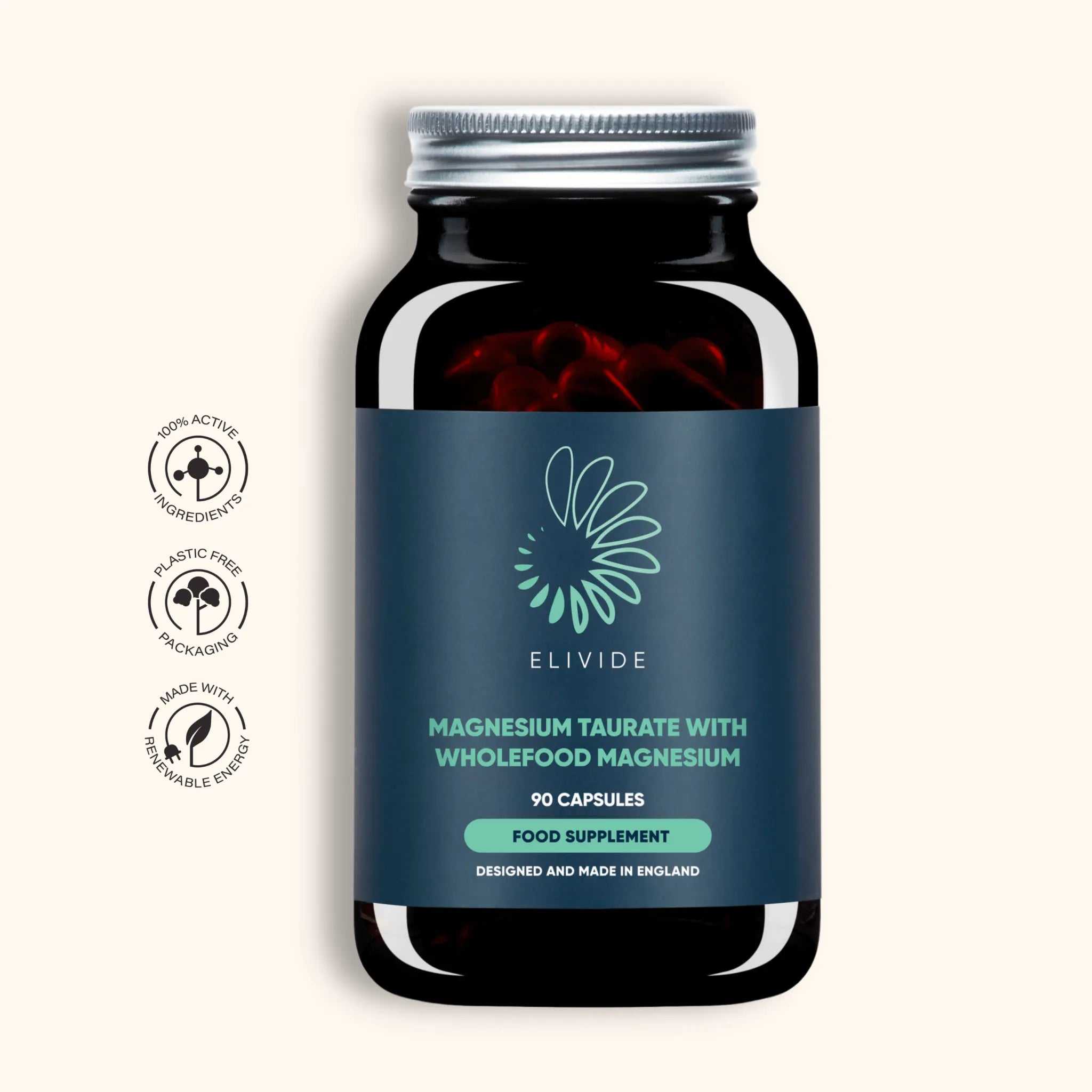
Not sure which magnesium? Take our quiz →
A Practical Approach to Nutritional Vagal Support
Based on what the current evidence tells us, a sensible nutritional strategy for supporting vagal function would look something like this:
- Correct magnesium deficiency first. Given how common subclinical deficiency is and how strongly magnesium connects to parasympathetic function, this is the obvious starting point. Magnesium bisglycinate or magnesium taurate are well-suited forms for nervous system support.
- Get your omega-3 intake right through whole fish preferably.
- Keep vitamin B12 and D within optimal ranges, not just "normal" ones. Our article on optimal versus normal nutrient ranges explains the difference.
- Look after your gut. Dietary fibre, fermented foods, and targeted probiotics where appropriate. Worth noting that the gut microbiome also affects magnesium absorption, so these two areas reinforce each other.
- Pair supplementation with behavioural practices like slow breathing and regular exercise. These still have the strongest overall evidence for improving vagal tone, and nutrition supports the conditions that let them work.
This approach treats vagal support as a system rather than a one-pill fix, which is much closer to the biological reality of how the vagus nerve actually operates. Overall mineral balance is a crucial but often overlooked foundation here, since a deficiency in one mineral can create cascading effects right across the nervous system.
Summary
The evidence for supplements and vagal function varies enormously. Omega-3 fatty acids stand out with the most robust clinical trial data, showing consistent improvements in vagal tone measured through HRV. Magnesium has strong mechanistic and observational backing, with emerging interventional data supporting its role in parasympathetic activation. Probiotics are genuinely promising, particularly after a notable 2025 RCT demonstrated improved vagal function through the gut-brain axis. B12, vitamin D, and GABA have meaningful but more limited support, coming mainly from observational studies and smaller trials.
The most effective strategy combines targeted nutritional support with the behavioural practices that carry the strongest evidence. No supplement can replicate what slow breathing, regular movement, and genuine stress reduction achieve. But the right nutritional foundation makes sure your nervous system has the raw materials it needs to respond when you do put those practices in place.


